

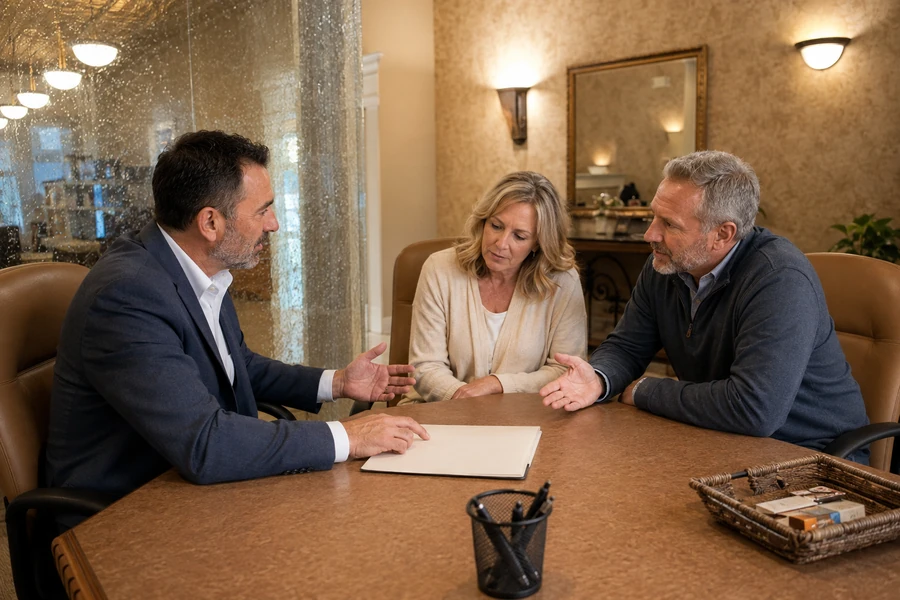
Estate planning is easy to postpone, but waiting can leave your family without clear instructions when they need them most.
Macon County Title makes it easier to put the essential pieces in place. Depending on your situation, that may include a will or trust and a health care power of attorney.
You do not need to have every answer before meeting with an attorney. You just need to start the conversation.
What an Estate-Planning Conversation Can Help You Decide
• Whether you need a will or trust
• Who should manage your estate
• Who should care for minor children
• Who should make health care decisions if you cannot
• How your home and other property fit into the plan
• Whether your existing documents need to be updated
The right estate plan depends on your property, relationships, goals, and existing documents. An attorney can help you understand the options and prepare documents that fit your life.
What a Will Does
A will gives instructions for administering your estate after your death. It can identify who should receive property governed by the will, name the person you want to handle the estate, and nominate a guardian for minor children.
A will does not necessarily control every asset you own. Property held in a trust, jointly owned property, and accounts with valid beneficiary designations may transfer under other arrangements. Those pieces should be reviewed together so they support the same plan.
A will also does not automatically avoid probate. It provides instructions for the probate process when probate is required. Clear, properly prepared instructions can still reduce uncertainty about your intentions.
When a Trust May Make Sense
A trust is a legal arrangement that holds and manages assets under written instructions. Depending on how it is designed, a trust may help manage property during your lifetime, after incapacity, and after death.
Some Illinois families use a revocable living trust to provide continuity and help properly funded assets pass without probate. Creating the trust document is only part of the process. The appropriate assets must also be transferred to or coordinated with the trust.
A trust is not automatically the right choice for everyone. An attorney can help you compare a will-based plan with a trust-based plan based on your property, family circumstances, and goals.
Why a Health Care Power of Attorney Matters Now
A will or trust primarily addresses property and estate administration. A health care power of attorney answers a different question: Who may make health care decisions for you if you cannot make them yourself?
Illinois allows an adult to name a trusted person as a health care agent. That agent may communicate with health care providers and make medical decisions according to the authority and directions included in the document.
The Illinois Department of Public Health recommends discussing advance directives with family, health care professionals, attorneys, and the person selected as agent.
Choose someone who is willing to serve, can remain calm under pressure, and will respect your wishes. It is also wise to consider a backup agent in case your first choice is unavailable.
Why Waiting Can Make Things Harder
Estate planning requires conversations about illness, incapacity, death, family relationships, and money. It is understandable that people put it off. The problem is that an illness or accident may not wait until you feel ready.
Without written documents, Illinois law and court procedures may determine what happens to your property. Family members may also be asked to make difficult decisions without knowing exactly what you wanted or having the legal authority they need.
You do not need to arrive at your first meeting with a finished plan. The attorney can help organize the decisions, explain the available documents, and identify what fits your circumstances.
When to Review an Existing Plan
Estate planning is not a one-time task. Consider reviewing your documents after:
• Marriage, divorce, or a new long-term partnership
• The birth or adoption of a child
• The death or incapacity of someone named in your plan
• Buying or selling a home or other major property
• Starting, buying, or selling a business
• A substantial change in finances
• Moving to another state
• A change in the people you trust to carry out your wishes
Even without a major event, a periodic review can catch outdated names, property information, and beneficiary choices.
Prepare for Your First Estate-Planning Meeting
Macon County Title has a basic estate-planning checklist to help you gather useful information before your first meeting. It can save time and help you begin the conversation with a clearer picture of your family, property, existing documents, and preferred decision-makers.
The checklist may ask you to gather:
• A general list of real estate, financial accounts, insurance, and business interests
• Existing wills, trusts, deeds, beneficiary designations, and powers of attorney
• Names of people you may want to serve as executor, trustee, guardian, or health care agent
• Questions involving children, blended families, property, or charitable gifts
The checklist will be linked here after MCT provides the final PDF.
Take the First Step
Estate planning can give the people you trust clearer instructions and legal authority when they need it. Starting now can also spare your family from having to guess later.
Macon County Title provides attorney-supported estate planning for families and property owners throughout Decatur and Central Illinois. The team can help you consider a will or trust, prepare a health care power of attorney, and coordinate planning involving your home and other real estate.
Call Macon County Title at (217) 428-8080 or visit the wills and trusts service page to request an estate-planning consultation.
This article provides general information and is not legal advice. Estate-planning documents and strategies should be reviewed for your specific circumstances by a qualified Illinois attorney.