


A contract for deed in Illinois can look like a flexible way to buy or sell property when a traditional mortgage is not the right fit. But because the buyer usually makes payments over time while the seller keeps legal title until the contract is paid off, the details matter from the start.
For investors, FSBO sellers, and buyers across Decatur, IL, Macon County, and Central Illinois, this kind of agreement should never be treated like a handshake deal. The payment schedule, title condition, taxes, insurance, default terms, and recording steps can all affect whether the deal protects both sides or creates problems later.
This article explains how a contract for deed works, what risks to watch for, and why legal review and title verification should happen before anyone signs.
What Is a Contract for Deed in Illinois?
A contract for deed, sometimes called an agreement for deed or land contract, is a real estate purchase arrangement where the buyer pays the seller over time. Instead of getting a traditional mortgage from a lender, the buyer makes payments directly to the seller under written terms.
In many arrangements, the seller keeps legal title to the property until the buyer completes the required payments. The buyer may receive possession of the property, but the deed is not transferred until the contract terms are satisfied.
That structure is what makes a contract for deed different from a standard closing with immediate deed transfer. It can give both sides flexibility, but it also means both sides need to understand what happens during the payment period and what happens if the agreement falls apart.
Why Investors and Sellers Consider This Option
A contract for deed may come up when a buyer cannot use traditional financing, when an investor wants to structure a deal directly with a seller, or when a seller wants to create a payment stream instead of receiving the full sale price at closing.
For some Central Illinois property owners, this can seem appealing. The seller may reach more potential buyers. The buyer may get a path toward ownership. An investor may see a way to acquire or sell property without waiting on lender approval.
But flexibility does not remove risk. It shifts the risk into the written agreement. That is why the contract needs to clearly explain the purchase price, down payment, payment schedule, interest if any, taxes, insurance, maintenance responsibilities, default terms, and deed transfer process.
A contract for deed does not eliminate the need for professional guidance. Buyers and sellers can benefit from working with an experienced Realtor who understands the local market, helps them evaluate the property and proposed terms, and coordinates with the title company, inspector, and attorneys involved. Each professional serves a different role in helping the parties make an informed decision.

Contract for Deed Illinois Risks Buyers Should Review
For buyers, the biggest concern is that making payments does not always mean receiving title right away. If the buyer does not fully understand the contract, they may invest money in a property without knowing exactly when or how the deed will be transferred.
Buyers should ask whether the seller actually has clear title, whether there are liens or unpaid taxes, and whether any mortgage or other claim could affect the property. A title search can help identify ownership issues before the buyer commits money to the deal.
Buyers should also pay close attention to default language. If a payment is missed, what notice is required? Is there a cure period? What happens to payments already made? Can the seller terminate the agreement? These questions are too important to leave vague.
An independent property inspection is also worth considering before signing. Buyers are often responsible for maintenance and repairs during the contract period, so understanding the property's condition can help prevent expensive surprises later.
Contract for Deed Illinois Risks Sellers Should Review
Sellers also carry risk. If the buyer takes possession but stops paying, the seller may have to follow legal steps to recover the property or enforce the agreement. That can take time, money, and careful documentation.
A seller should know who is responsible for property taxes, insurance, repairs, utilities, and code issues during the payment period. If those terms are not clear, both sides may end up arguing about costs that should have been addressed in the contract.
Sellers should also consider whether this arrangement creates recordkeeping, tax, or financing issues. A contract for deed is not just a sales document. It can affect how the property is managed until the deed is finally transferred.
Why Title Review Still Matters
Some people assume title work can wait until the final payment is made. That is risky. If there is a title defect, lien, unpaid tax issue, boundary concern, or ownership question, it is better to identify it before the contract is signed.
A title search helps both sides understand what is attached to the property. It can confirm ownership history, identify recorded liens, and flag issues that may need to be resolved before the agreement moves forward.
For a buyer, title review helps answer, “What am I really agreeing to buy?” For a seller, it helps answer, “Can I deliver what this contract promises?” Those questions matter whether the property is a home, rental, commercial building, or land.

Details That Should Be Clear Before Signing
A contract for deed should be specific enough that both sides understand their rights and responsibilities. At minimum, the parties should review:
- Purchase price and payment terms: Down payment, monthly payment, interest, due dates, and final payoff timing.
- Title and deed transfer: When the deed will be delivered and what must happen first.
- Taxes and insurance: Who pays, what coverage is required, and how proof will be shared.
- Maintenance and repairs: Who handles ordinary repairs, major repairs, and property condition issues.
- Default terms: What counts as default, what notice is required, and what options each side has.
- Recording: Whether and how the agreement should be recorded, and who handles that step.
This is also where attorney review matters. A well-written agreement can reduce confusion. A vague agreement can create the exact conflict both sides were hoping to avoid.
Use the Contract for Deed Risk Checklist
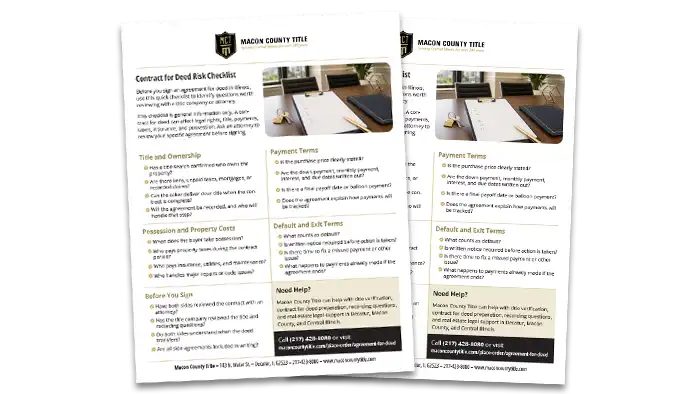
Before signing, use the Contract for Deed Risk Checklist to review important questions about title, payments, property costs, default terms, inspections, and deed transfer.
The checklist is general information and cannot account for the facts of a specific transaction. Both sides should ask an attorney to review the agreement before signing.
When to Contact Macon County Title
If you are considering a contract for deed in Illinois, it is worth slowing down before signing. A short review period can help uncover title issues, unclear payment terms, missing contract language, or recording questions.
Macon County Title provides real estate legal services, title support, and contract for deed assistance for property transactions in Decatur, Macon County, and Central Illinois. The team can help with drafting, title verification, recording steps, and legal support for more complex terms.
Because every property and agreement is different, this article is general information and not legal advice. Before signing a contract for deed, talk with an attorney about your specific situation.
To ask about a contract for deed, contact Andrew or the Macon County Title team at (217) 428-8080, or visit the Request Contract for Deed page to get started.